

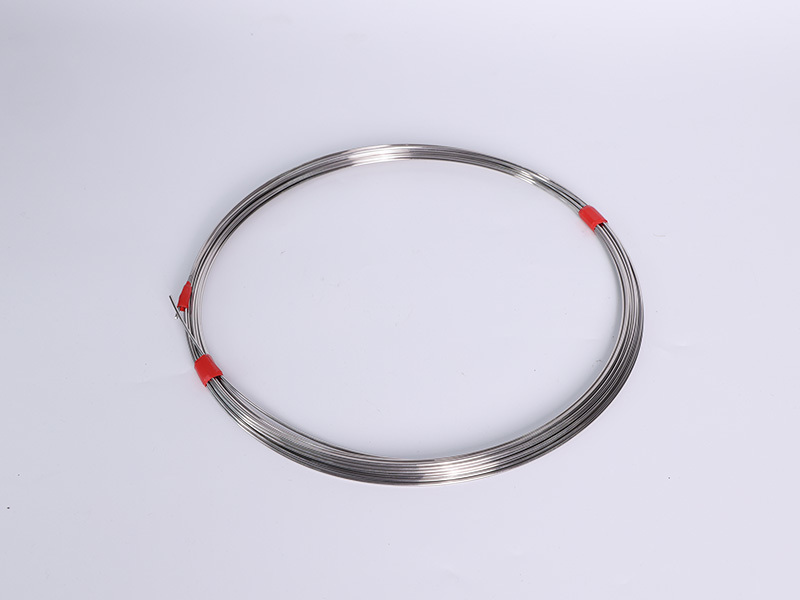
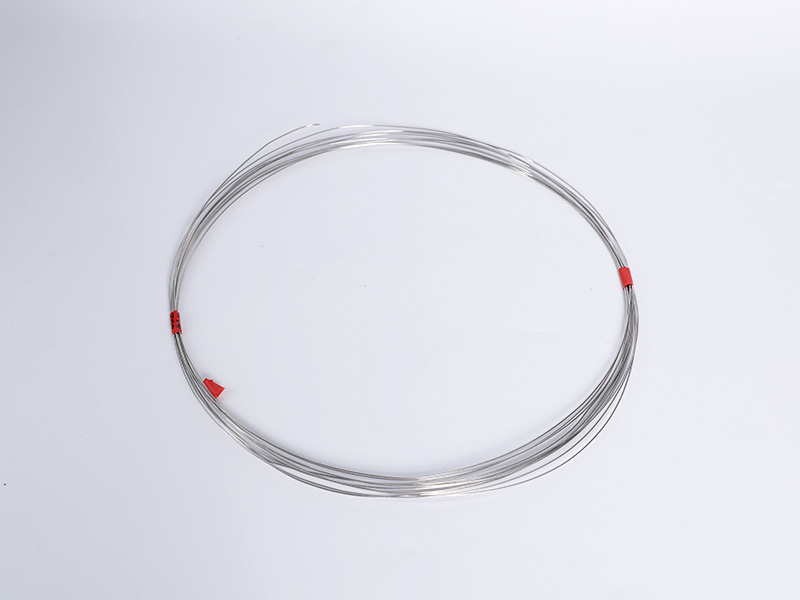
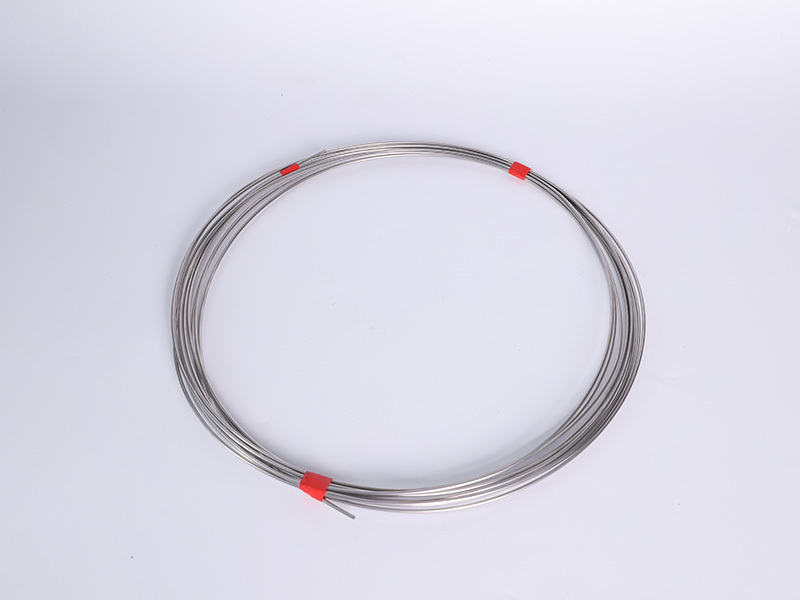
ERNiCr-3
For welding of similar nickel-based alloys. We provide high quality precision alloys, high-temperature alloys, corrosion-resistant alloys, light source materials, high-strength molybdenum wires, titanium alloy feeders, and other series of products.
Series:
- Product Description
-
- Commodity name: ERNiCr-3
For welding of similar nickel-based alloys.
Brand number Chemical composition C Cr Ni Mo Ti AI Nb Fe Si Mn P S Cu Other elements ERNiCrMo-3 ≤0.1 20~23 ≥58 8.0-10.0 S0.4 50.4 3.15-4.15 ≤5 ≤0.5 ≤0.5 $0.02 ≤0.015 ≤0.5 - ERNiCrMo-4 ≤0.02 14.5-16.5 margin 15.0-17.0 - - - 4-7 ≤0.08 ≤1.0 ≤0.04 ≤0.03 ≤1.0 V:≤0.35; W:3-4.5; CO:≤2.5 ERNiCrMo-7 ≤0.015 14-18 margin 14-17 ≤0.7 - - ≤3.0 ≤0.08 ≤1.0 ≤0.04 ≤0.03 ≤0.5 Co:≤2.0 ERNiCrMo-10 ≤0.02 20-22.5 margin 12.5-14.5 - - - 2-6 ≤0.08 ≤0.5 ≤0.02 ≤0.01 ≤0.5 V:≤0.35; W:2.5-4.5; CO:≤2.5 ERNiCrMo-13 ≤0.01 22-24 margin 15.6-16.5 - 0.1-0.4 - ≤1.5 ≤0.1 ≤0.5 ≤0.015 ≤0.005 - CO:≤0.3 ERNicr-3 ≤0.1 18-22 ≥67 - ≤0.75 - - ≤3 ≤0.5 2.5- 3.5 ≤0.02 ≤0.015 ≤0.5 Nb+Ta:2-3 ERNiCu-7 $0.15 - 62-69 - 1.5-3.0 ≤1.25 - ≤2.5 ≤1.25 ≤4.0 ≤0.02 ≤0.005 margin ≤0.5 Domestic brand Foreign brand ERNi-1 N02061 ERNiCrMo-3 N06625 ERNiFeCr-2 N07718 ERNiCrMo-4 N10276 ERNiCrMo-2 N06002 ERNiCrMo-10 N06022 ERNiCrMo-14 N06686 ERNiCr-3 N06082 ERNiCr-4 N06072 ERNiCr-6 N06076 ERNiCrFe-5 N06062 ERNiCrFe-6 N07092 ERNiCrFe-7 N06052 ERNiCrFe-8 N07069 ERNiCrFe-11 N06601 ERNiMo-1 N10001 ERNiMo-2 N10003 ERNiMo-3 N10004 ERNiMo-7 N10665 ERNiCrMo-15 N07725 ERNiCrCoMo-1 N06617 Use
For welding of similar nickel-based alloys.
● ERNiCrMo-3 is used for welding and surface cladding of UNS N06625 alloy; ERNiCrMo-4 is used for welding and surface cladding of UNS N10276 alloy.
● ERNiCrMo-4 is used for welding and surface cladding of UNS N10276 alloy.
● ERNiCrMo-10 is used for welding of UNS N06022 alloy.
● ERNiCrMo-13 is used for welding and surface cladding of UNS N06059 alloy and dissimilar steels.
● ERNicr-3 is used for welding of UNS N06600 alloy.
● ERNiCu-7 is used for welding of UNS N04400 alloy.
Precautions and operating points
● The welding area must be thoroughly cleaned of surface impurities such as oil stains, rust, and moisture.
● When welding, small wire energy is used, and it is recommended to use a lower inter pass temperature.
Specialty welding wire plays a critical role in industries that demand exceptional strength, corrosion resistance, and long-term reliability. Widely used in sectors such as petrochemical processing, aerospace, marine engineering, power generation, and chemical manufacturing, specialty welding wires are specifically engineered to match or exceed the performance of advanced base materials, particularly nickel-based and corrosion-resistant alloys.
One of the primary applications of specialty welding wire is the welding and surface cladding of nickel-based alloys. These alloys are known for their outstanding resistance to corrosion, oxidation, and high-temperature deformation. For example, ERNiCrMo-3 welding wire is commonly used for welding and overlaying UNS N06625 alloy, delivering excellent resistance to pitting, crevice corrosion, and fatigue in aggressive environments. Similarly, ERNiCrMo-4 is designed for welding and surface cladding of UNS N10276 alloy, offering superior resistance to strong acids and chlorides, making it ideal for chemical processing equipment.
Other specialized grades address equally demanding applications. ERNiCrMo-10 is suitable for welding UNS N06022 alloy, which is widely used in flue gas desulfurization systems and heat exchangers. ERNiCrMo-13 is engineered for welding and surface cladding of UNS N06059 alloy as well as dissimilar steel joints, providing a balanced combination of strength, corrosion resistance, and metallurgical compatibility. ERNiCr-3 is commonly selected for welding UNS N06600 alloy, known for its stability at elevated temperatures, while ERNiCu-7 is optimized for welding UNS N04400 alloy, a nickel-copper material valued for its resistance to seawater and hydrofluoric acid.
The performance of specialty welding wire depends not only on its chemical composition but also on correct welding practices. Prior to welding, it is essential to thoroughly clean the welding area to remove oil, rust, moisture, and other surface contaminants. These impurities can lead to defects such as porosity, cracking, or reduced corrosion resistance in the weld metal. Careful surface preparation ensures strong metallurgical bonding and consistent weld quality.
During welding, controlled heat input is another critical factor. Using lower wire energy and maintaining a low interpass temperature helps prevent excessive heat buildup, which can negatively affect the microstructure and corrosion resistance of nickel-based alloys. Proper heat control also reduces the risk of hot cracking and distortion, especially in thick or complex components.
With the increasing use of high-performance alloys in harsh environments, specialty welding wire has become an indispensable consumable for modern fabrication and maintenance. By selecting the correct welding wire grade and following recommended operating procedures, manufacturers can achieve durable, high-quality welds that extend equipment life, reduce downtime, and ensure safe operation under extreme conditions.
Key Words:
ERNiCr-3
KUNLUN PRODUCTS
Recommended Products
Please leave your email, our professional person will contact you asap!
Learn more about our information

Our Services
It is committed to providing high-quality precision alloys, high-temperature alloys, corrosion-resistant alloys, light source materials, high-strength molybdenum wire, titanium alloy feeding and other series of products to global customers.
Hot Line




Products Serise
Contact Us
Loncation
No.186 Lingang Avenue, Gaogang District, Taizhou, China
Tel